Zekavat Trip, Post #2
When I wrote the Zekavat grant proposal, I dreamed of being a “slow tourist” so I could savor the cultures and locales that inspired the great modernist literature and drama I had read in my college course. I figured that going slowly and being very selective about the activities in each city would allow me to document what I learned by blogging along the way. I fantasized about café life and imagined myself with large chunks of time to people watch, write, and maybe even draw! Or paint?
Spoiler alert — speaking broadly, there wasn’t anything slow about this trip. We logged an average of 15,000 to 20,000 steps each day and only spent about three days in each city. But I did have the blessing of the grant’s special focus to help me carefully choose activities, some of which were at less-popular spots, allowing for many peaceful moments along the journey.
I actually didn’t mind missing the bigger tourist attractions at all, especially when, just as we were about to get to Paris, we heard that the Louvre workers went on strike:
The Louvre has become a symbol of tourism pushed to its limits. As hotspots from Venice to the Acropolis race to curb crowds, the world’s most iconic museum, visited by millions, is hitting a breaking point of its own.
Just a day earlier, coordinated anti-tourism protests swept across southern Europe. Thousands rallied in Mallorca, Venice, Lisbon and beyond, denouncing an economic model they say displaces locals and erodes city life. In Barcelona, activists sprayed tourists with water pistols — a theatrical bid to “cool down” runaway tourism.
We did, however, visit the Musée d’Orsay, a world-renowned museum second only to the Louvre in terms of popularity in Paris, and saw signs of strain similar to those described in the article. While we were there, the line to get a bite at the café was so long — with some folks getting a wee bit testy — that they started just giving out bottles of water to anyone who wanted one. Bathrooms were scarce and smelly. I don’t think the museum workers are able to keep up with the crush of people. It really made me think about overtourism and how impactful travel is on humans, infrastructure, landmarks, local economies, the environment, etc.

So, going slowly and thoughtfully makes sense.
Even though the trip often felt busy, in reality we usually only did one major activity a day, spending the rest of the day walking around, eating, even working in cafés when we could. We did find café life in the cities we visited to be a little different than in the US; we couldn’t just assume it was OK to open our laptops and work. In Bloomsbury, our neighborhood in London, we found a great café called Bex Coffee that advertised itself as a spot to work, and we spent some nice down time there thinking and processing our adventures.
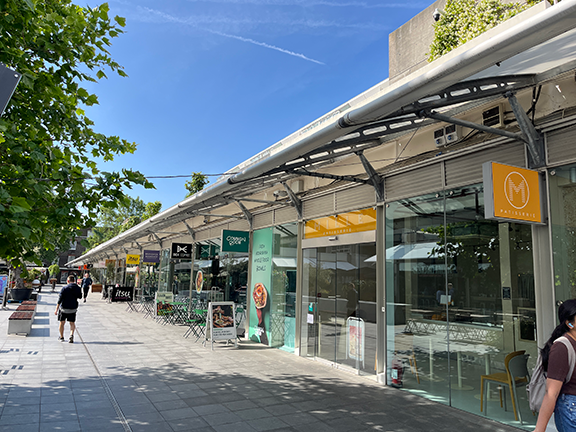
As it turns out, just by relaxing in the café, I learned about modernist architecture in London. The café was in the Brunswick Centre, a very cool Brutalist shopping center that was, not surprisingly, a shooting location in the recent season of Andor.
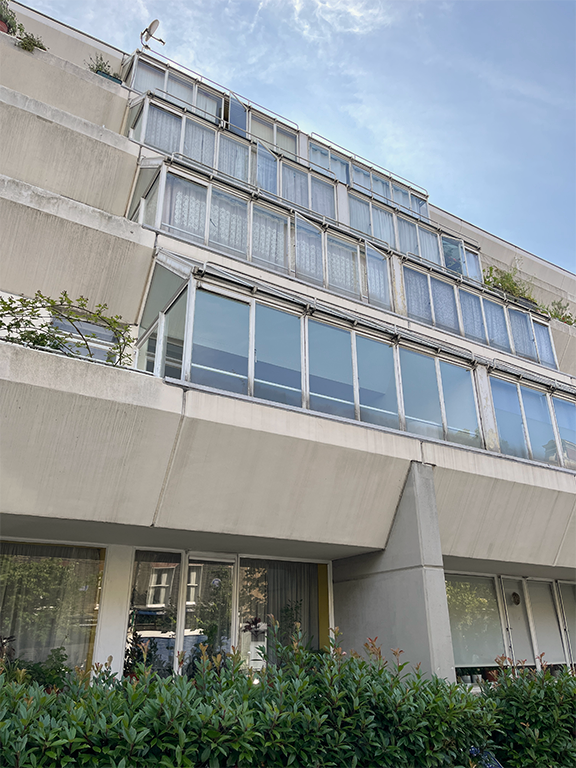
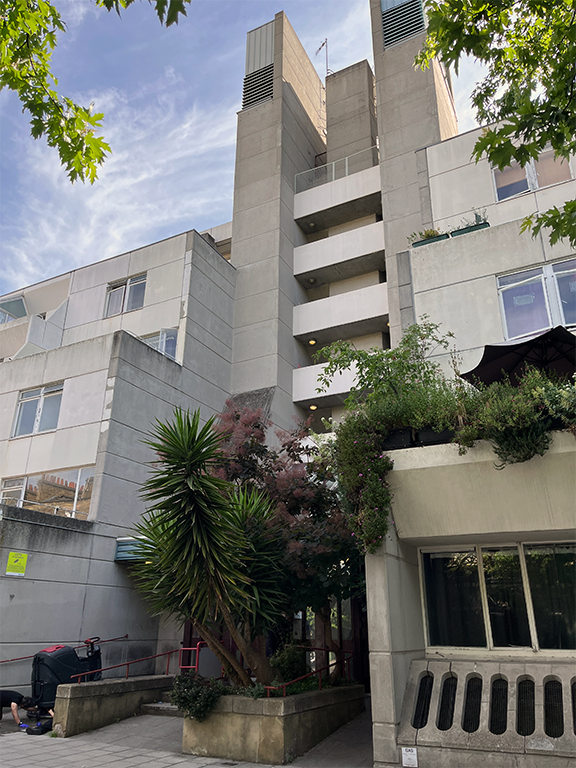
This video shows where in “Andor” they used the Brunswick Centre. Sorry, had to share for fellow “Star Wars” geeks.
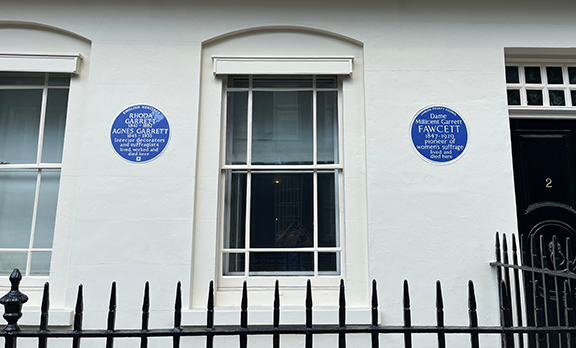
Sitting at Bex, I had time to read about Bloomsbury, where Virginia Woolf and her husband and a number of their friends lived; they were known as the Bloomsbury Group, an elite group of artists, writers, and intellectuals. All over the neighborhood, there are a number of blue plaques, which designate the dwelling of someone notable.
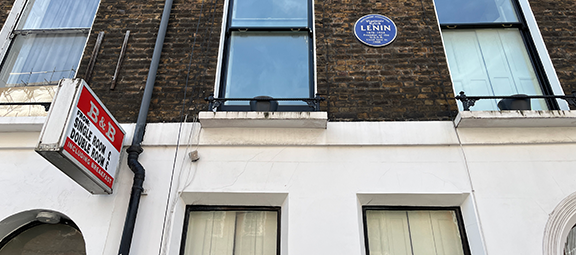
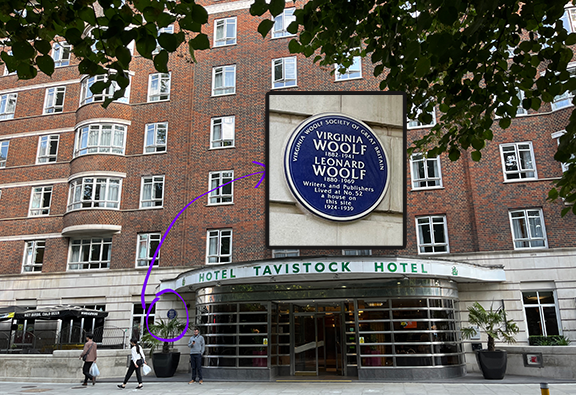
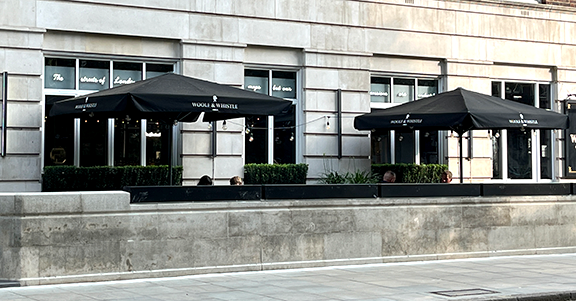
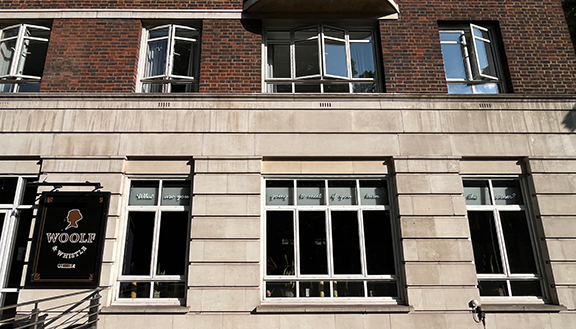
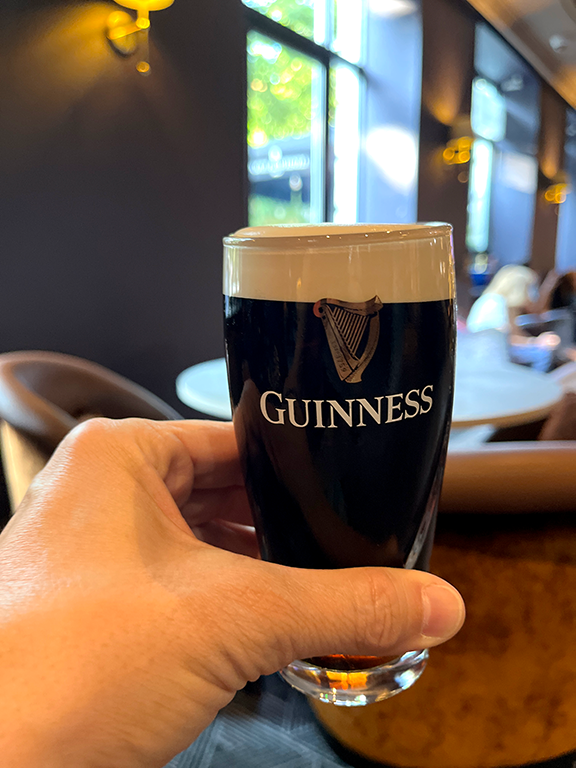
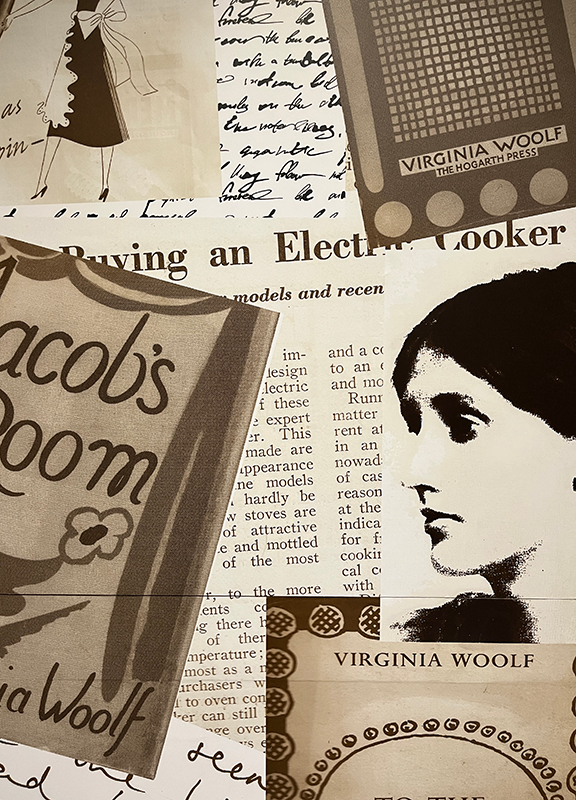
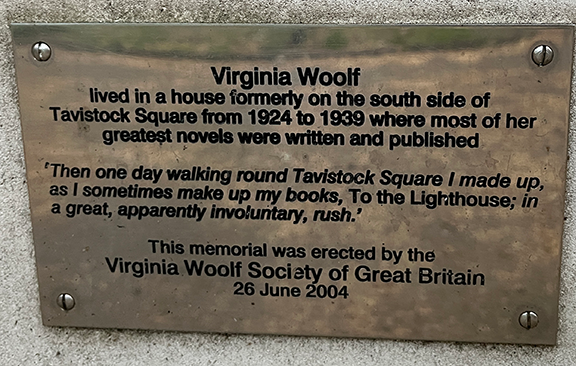
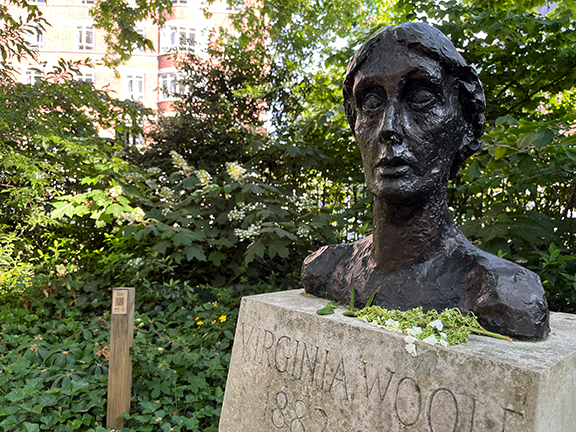
Bloomsbury is home to the British Museum, the Royal Academy of Dramatic Arts, parts of the University of London, bookstores, restaurants, and cafés. I saw huge school groups everywhere; the most common prop of passersby was a rolling suitcase. The terrific market in the Brunswick Centre was also a great amenity for what I imagine were a lot of remote workers and all the travelers I saw. It’s not surprising that the Bex Café marketed itself as a work space.
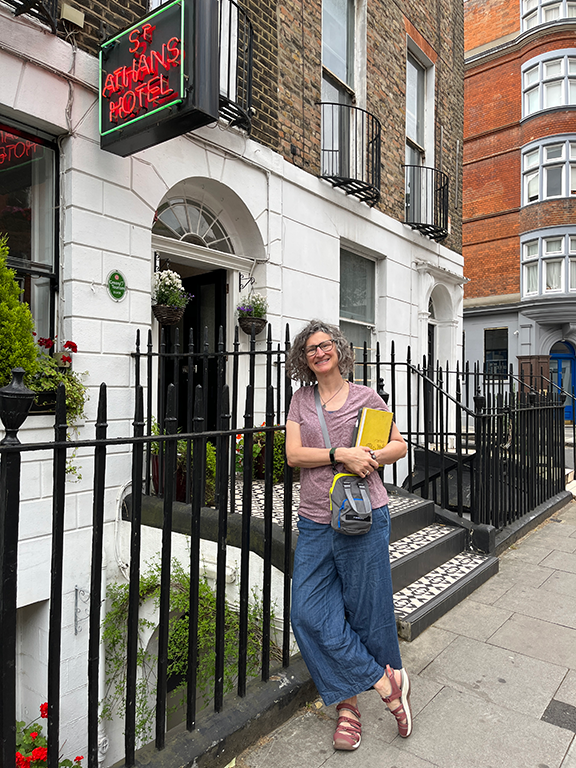
At Bex, I got to process my thoughts, write in my journal, deal with travel problems when they arose, like when at the last minute, our train from London to Paris was cancelled and we had to book a flight instead.
Going slow, for me anyway, didn’t end up including drawing or painting, or even getting all that much time sitting and people watching at cafés. Instead, it meant being conscious of not doing too much and of being sure to leave unscheduled time in each day. This allowed me to pay attention and to be open to serendipity. Essentially, I followed the advice a dear friend gave me before I left for the trip: I imagined that I had a divining rod and that it would lead me to where I needed to be.
And that was slow enough.
All photos by Diana Day.