Zekavat Trip, Post #3
“Dance, dance, otherwise we are lost.” – Pina Bausch
After an easy overnight flight, we arrived in the morning to a rainy Dublin. We took an Uber to The Blooms Hotel, which is in Temple Bar, a lively Dublin neighborhood.
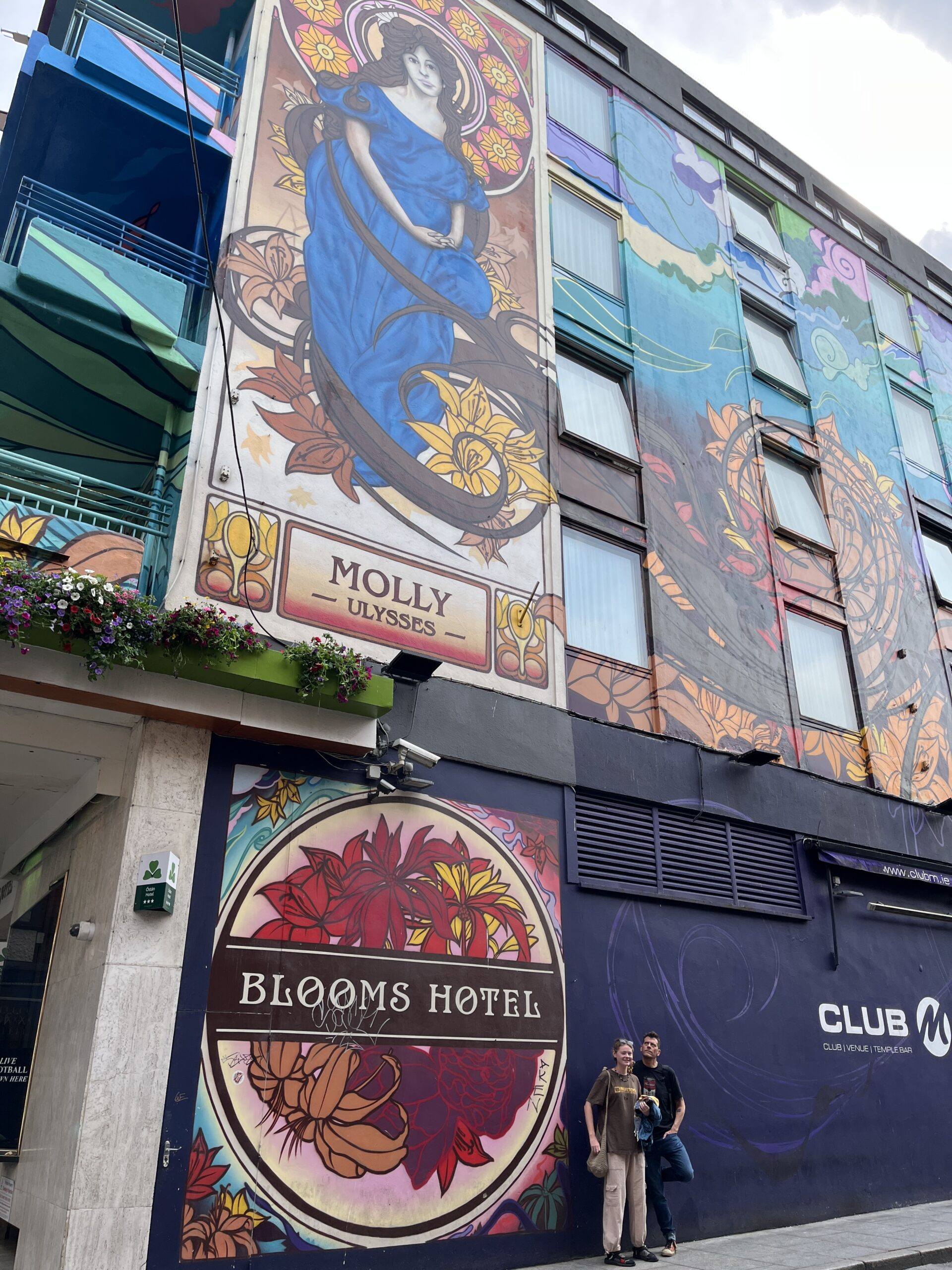
Dublin, the birthplace of James Joyce, was central to his writing even though he only actually lived in the city until he was about 23. In my college moderism course, we had read Joyce’s Dubliners; it is one of my favorite books, and I was really looking forward to learning more about Joyce in the city of his birth.
Fortuitously, I had scheduled our days in Dublin during the Bloomsday celebration, which honors Thursday, June 16, 1904, the single day of the events of the entire novel Ulysses, also by Joyce.
I’ve never read Ulysses, but it’s such a pivotal modernist work that I wanted to find out what I could about it, thinking that perhaps, with more context and good memories from the trip, I’d return home with a mind to tackle the giant beast of a novel. So, a couple of days before we left, I took a chance that there would be no problems with our flight to Dublin and booked a 2 p.m. walking tour for the same day as our arrival. The James Joyce Center offers two Ulysses walking tours; I booked the one called “Footsteps of Leopold Bloom,” since it promised an “immersive” experience.
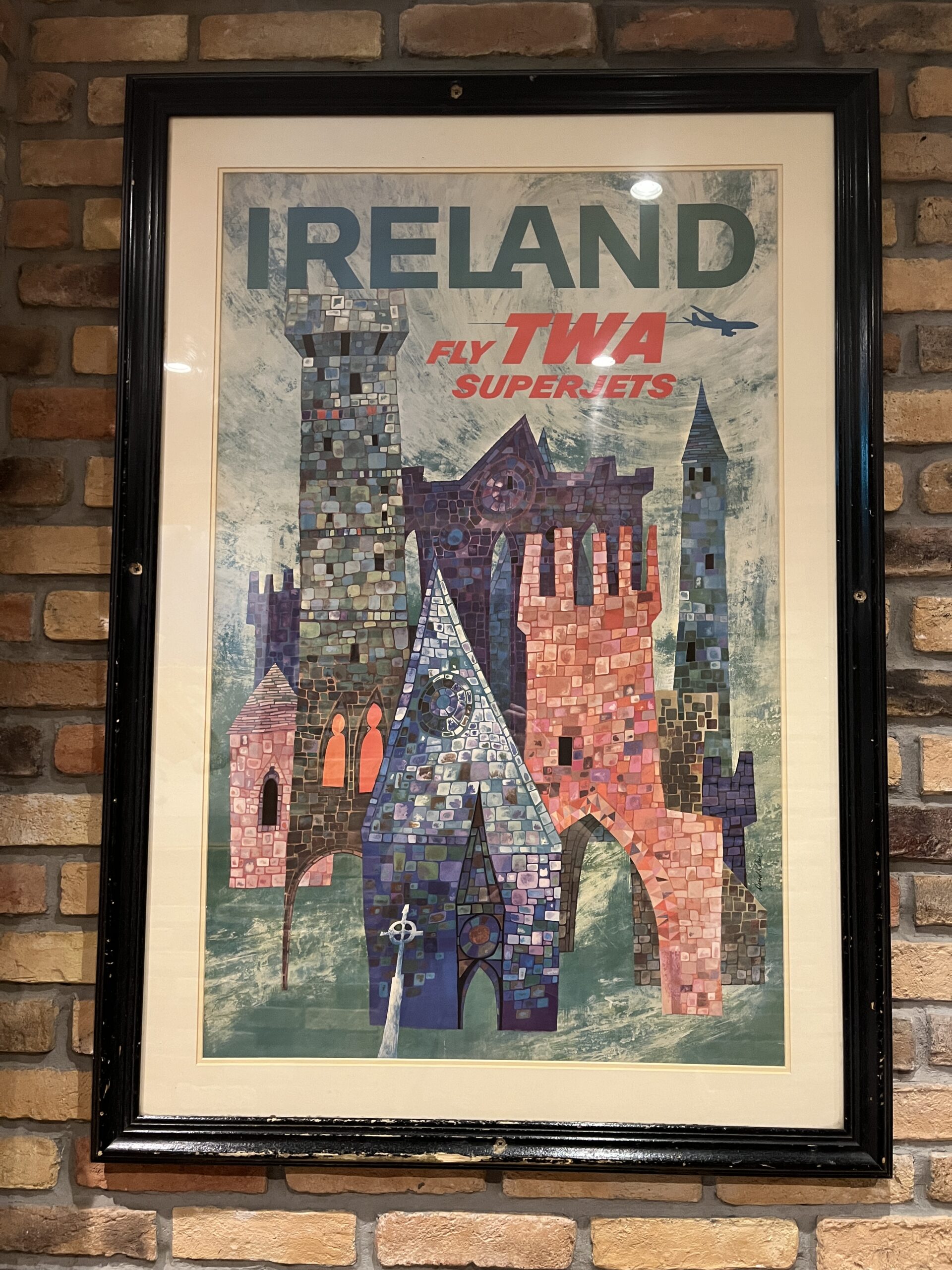
When we arrived to the hotel, we found out that our room was nearly ready for check-in, so we waited in the lobby, where I had a chance to enjoy the vintage travel posters.
Once in our room, I saw that I had a little time before I needed to leave for my tour. For a moment, I considered succumbing to jet leg by taking a wee nap, but suddenly realizing how hungry I was, I decided instead to try to find some lunch before the tour.
My plan was to eat and then to walk through the James Joyce Center before the tour. I knew it was about a 20 minute walk to the center, and it was still raining pretty insistently, so I took an umbrella. I hate umbrellas. I never know how to hold one. If it’s too low, I get it caught in my hair. If it’s higher, I can’t seem to help clipping other people’s umbrellas or their heads. I also never know where to put other things in my hands and am endlessly juggling phone, pen, notebook, water bottle.
Too hungry to fret about the umbrella, I packed my little backpack with my pens and notebook, donned my raincoat and left the hotel, umbrella in hand. I walked through the cobblestone streets of Temple Bar and crossed the River Liffey. I found a sandwich place, but it had no seating, so I ordered a prosciutto and cheese baguette and a Sanpellegrino Aranciata and took them to go in a little brown paper bag with handles.
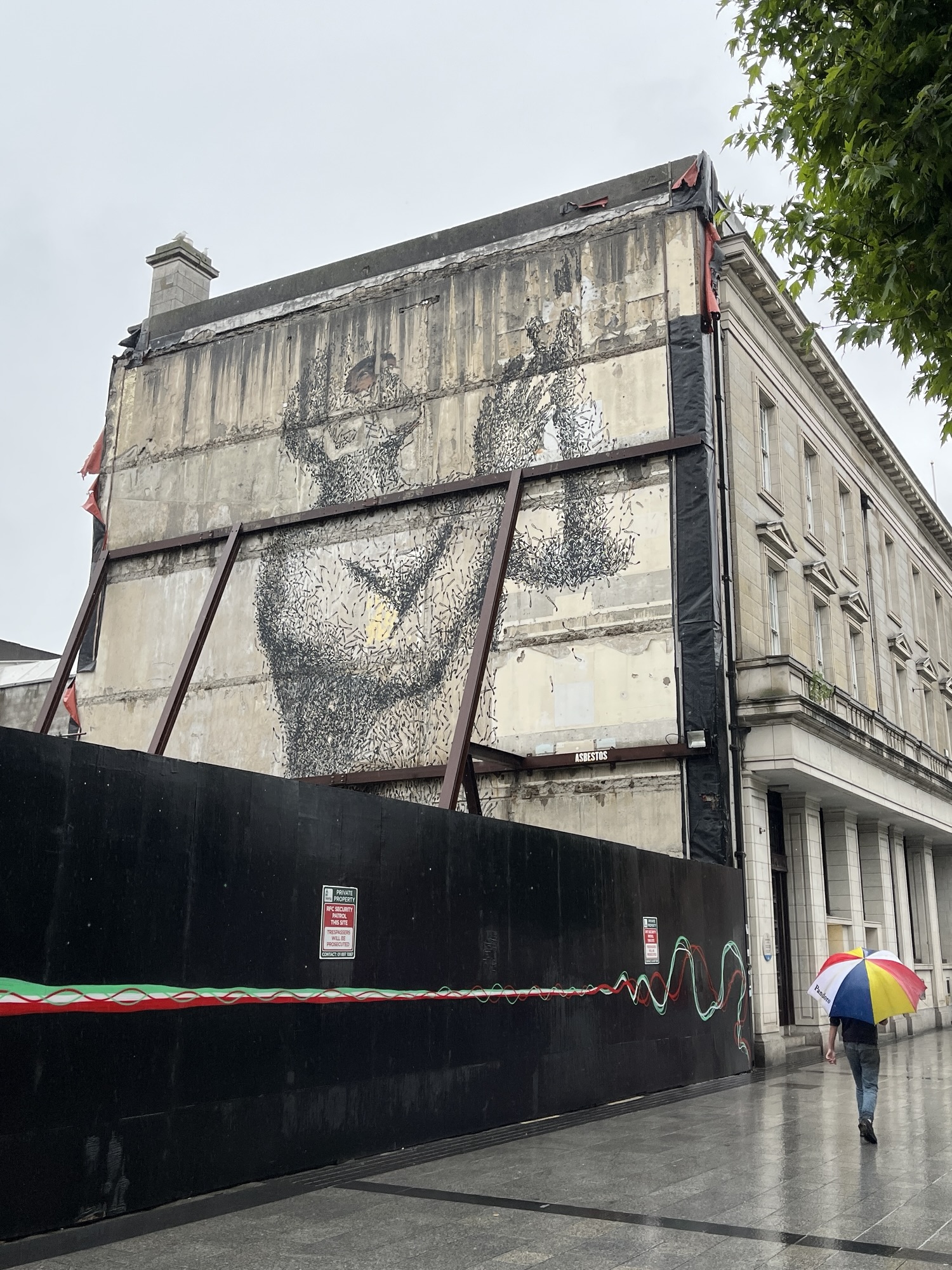
Now maneuvering my umbrella, my lunch bag, and my growing hunger, I made my way up O’Connell Street, desperately hoping that the James Joyce Center had an indoor spot where I could sit and eat. Even after just a half block, the paper bag was already getting very damp, making me wonder whether it was going to make it to the center. I couldn’t bear the thought of my sandwich dropping out of the bottom of the soggy bag and landing on the ground, so I picked up my pace.
The center is on North Great George’s Street, an elegant residential street of Georgian-style townhomes showing off their impressive pedigrees with one historical plaque after another. Not to be outdone, the James Joyce Center also had its own shiny history — it once belonged to dance professor Mr. Denis J Maginni, a character in Ulysses.
As soon as I ascended the steps, a kind-faced woman eagerly greeted me, and perhaps responding to the curious look on my face, asked me, “Are you here for the dance?”
Little did she know that the quizzical look on my face was me wondering whether I could eat my sandwich inside, and not whether I was there for a dance; nevertheless, in spite of my hunger pangs, I am a dancer, and the invitation was for a dance!
Incredulous that my first adventure of the trip might be to dance, I stood there with my dripping umbrella in one hand and my soggy brown bag in the other, and managed to ask, “Watching or participating?” knowing that I would be up for either. She laughed and said, “Oh, watching!” And of course I said sure, I’d love to watch a dance.
I had no idea what to expect.

The Maginni Room at the James Joyce Center.

The woman hustled me into a room in the house, some sort of parlor or living room (later I found out it was the Maginni Room, named for the famous owner of the home; the room was formerly a dining room) where I took a seat on a velvet settee on the side of the room, glad for a dry and warm place to settle for a bit. The room had been arranged for a performance, with a microphone in the center of the room, and all the available seating pushed around it in a U formation. It was a fancy room, and to my dismay, I could see that it would not be appropriate to try to sneak a bite of my lunch.
As I fumbled about sorting all my soaked things, desperately trying not to get the velvet couch wet, I could hear my stomach growling. It had been hours since I had eaten anything. I looked to my right and saw the woman next to me bemusedly watching me fidget with my dripping umbrella, backpack, coat, and wet lunch bag. I smiled at her sheepishly and took out my little notebook and a pen to create some sort of distraction from the rumbling and my fidgeting. Plus, I wanted to be ready for whatever I was about to see.
The woman who showed me to my seat needn’t have worried about recruiting people for the audience — there were plenty of folks packed into the parlor by the time the performance started.
Eventually a woman came to the mic and explained that we would be seeing a world premiere of a site-specific ballet called “Lucia’s Room,” and that it was a part of the city’s Bloomsday celebrations.
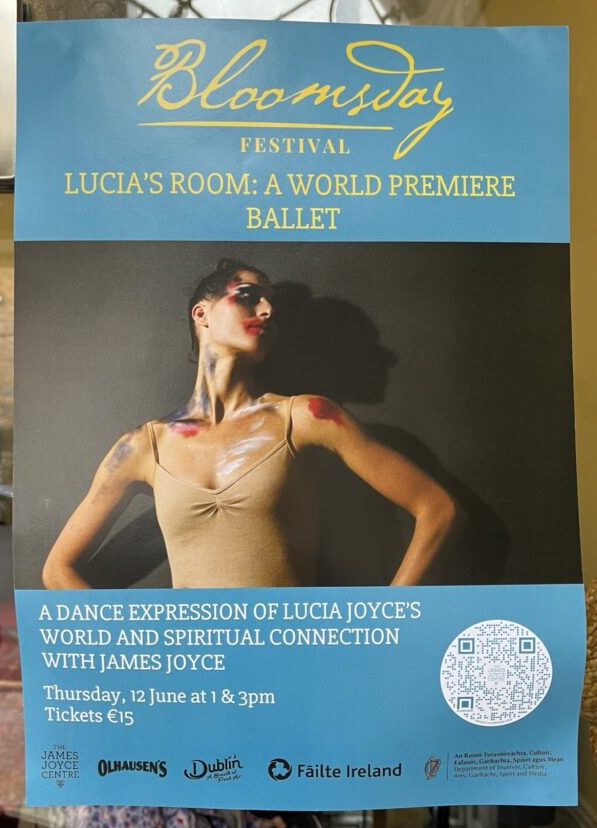
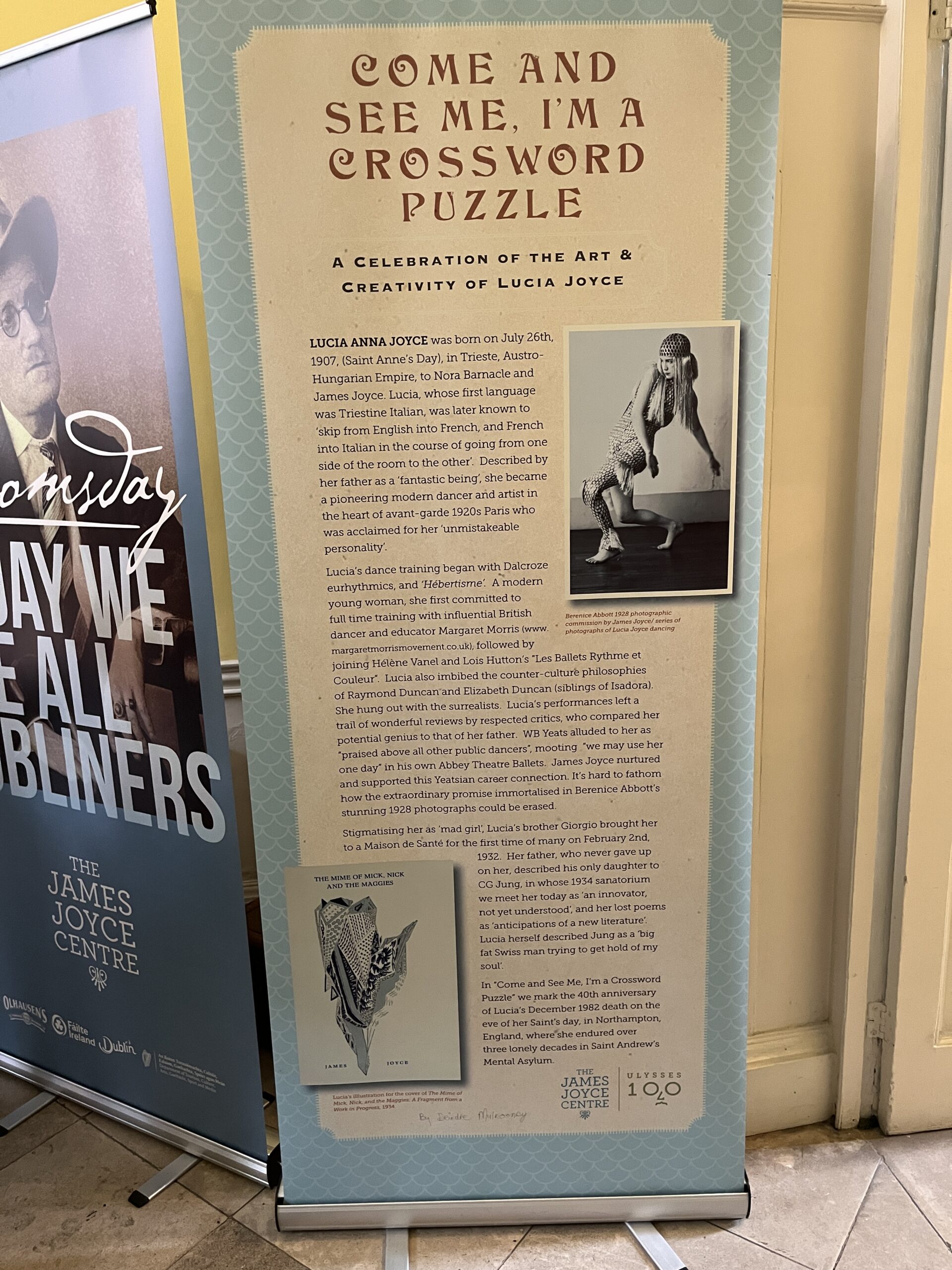
She explained that the ballet was a “reclamation of an overlooked female artist” and was inspired by the “mystery and magic of Lucia Joyce,” James Joyce’s daughter. Lucia spent the majority of her life in psychiatric hospitals; the ballet we were about to see was intended to explore both Lucia’s hallucinatory states and her connection with her father.
Hearing this, I felt slightly outside of my body, not able to comprehend how it was that my trip was starting with such a seredipitous connection to the purpose of the grant. It felt like an affirmation from the universe. In spite of hunger pangs and wet socks, I felt serenely happy and very excited for the dance.
Lucia Joyce, I learned, was a dancer and artist. She was born in Trieste in 1907 and started studying dance as a teenager; by that time her family lived in Paris. She studied with fascinating people who were part of the Paris cultural scene at the time, like Margaret Morris and Isadora Duncan’s brother Raymond Duncan.
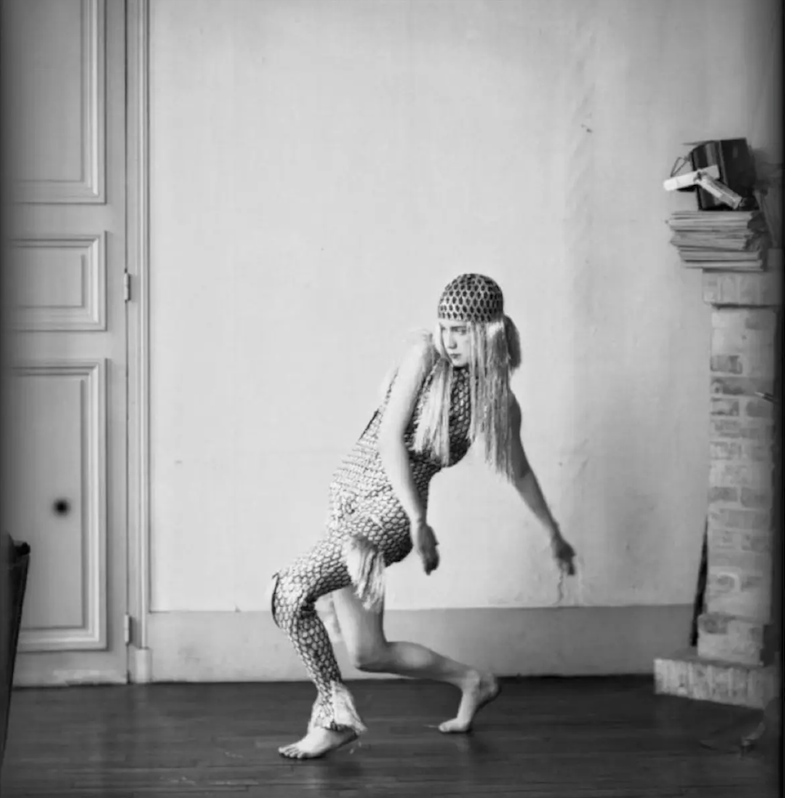
Lucia did perform professionally, and by all accounts, she was a talented and captivating dancer, but, sadly, her career was short. There are different accounts of why she stopped dancing — some say it was because of her fraught relationship with her mother, Nora Barnacle Joyce, who apparently made her stop. Others say her father disapproved of her dancing because he thought it made Lucia stressed and tired and weakened her already fragile mental state.
Whatever the reason for the end of her dance career, it’s clear that she had a complicated existence at home with her family. She apparently veered between calmness — a muse-like presence who drew or danced in the same room as her father while he was writing Finnegan’s Wake — and violence, throwing a chair at her mother, for example, when she learned that Nora had invited Lucia’s former lover Samuel Beckett to a family party.
She was diagnosed with schizophrenia in the 1930s and was, for a time, a patient of Carl Jung. Eventually, after moving in and out of mental hospitals, she was permanently institutionalized and died in 1982 at St. Andrew’s Hospital in Northampton, England.
Thoroughly intrigued, as I always am by the stories of women cast as muses — intelligent, talented, supposedly mad girls — I made a mental note to return the next day to visit the gift shop to see about the book Full Capacity, by Deirdre Mulrooney that the announcer had mentioned. (I did just that and thoroughly enjoyed the book and then moved onto Carol Loeb Shloss’ book Lucia Joyce: To Dance in the Wake, which I am currently reading.)
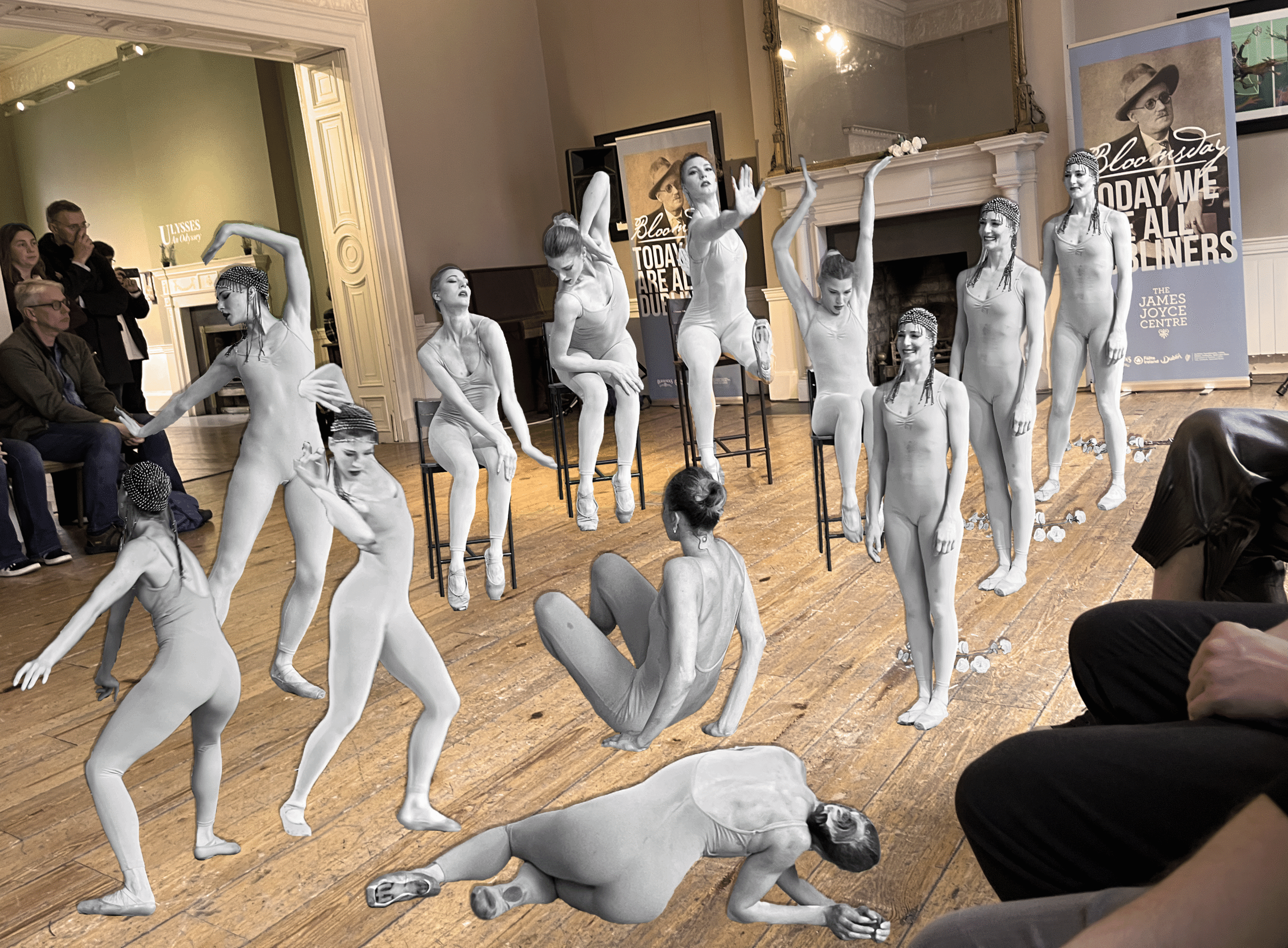
At some point during the introduction, there was movement in the hallway just outside the door to my left. I glanced out the door and saw the dancer (Mariam Darchia) there on the stairs, holding a bouquet of white roses. She wore a cotton unitard the same color as her skin and a beaded cloche on her head; it was such a poignant moment — the dancer in deep concentration, preparing to portray the character of Lucia in her fragile mental state. I desperately wanted to take a photo or to be able to sketch; I still had that sense of unreality that jet lag brings, in addition to disbelief at my outrageous luck to be in attendance at the world premiere of a ballet, and I wanted to remember every detail. I suppressed the urge, however, figuring it would be rude to interfere in the artist’s private preparation and decided I’d simply have to rely on memory.
(The video in the Instagram post above gives a really good sense of the choreography and music. Here and here are a couple more Instagram videos that wouldn’t embed.)
As expected, when the dance began, she came down the stairs and into the room, interacting with everything — the white roses, stair banisters, tables, chairs. She danced in the room for a few minutes, scattering the roses, and then started to exit out the same door she had entered; the event organizers moved behind her and motioned for the audience to follow her out of the room, into the hallway, then up the steps, into another room, and then finally into a large room lined with chairs and a fireplace on one end. All along the way, the dancer continued absorbing, deflecting, integrating all the furniture and elements of the home as costume, prop, or set.
At first, the choreography was reminiscent of Isadora Duncan, with shapes evocative of Egyptian hieroglyphics or Grecian urns, but as the dance progressed, her movements became increasingly bizarre, intense, desperate, and staccato, evoking images of mental anguish and a hallucinatory state. She changed shoes a couple of different times — by the end, she was wearing a ballet slipper on one foot and a pointe shoe on the other — and removed the cloche. She applied lipstick, which would eventually become smeared all over her face in a disturbing way.
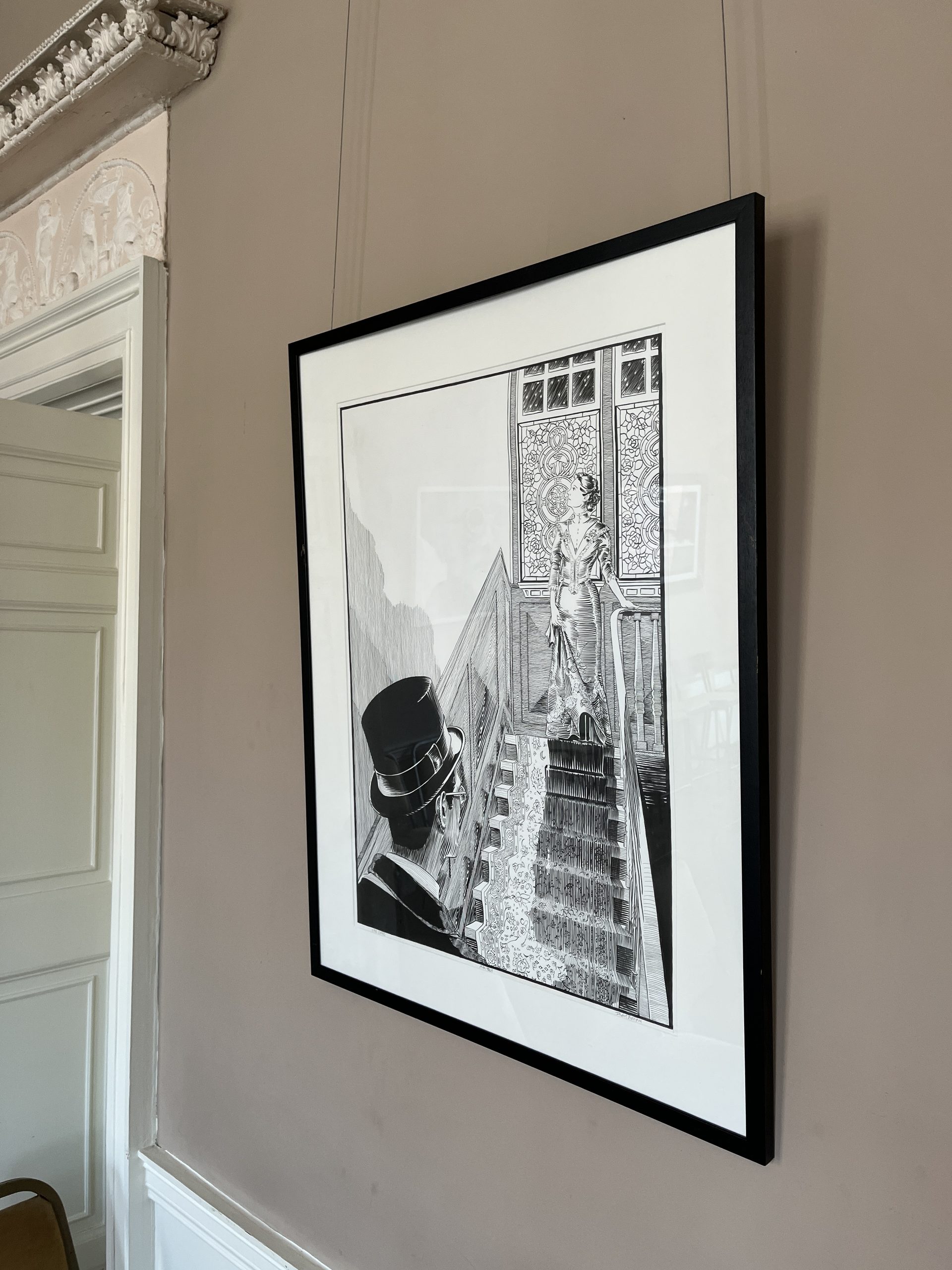
The soundtrack — a mixture of music, sounds, and spoken word — was created by Anamaria Burduli and Patrick Hammington. Near the end, I started recognizing some very familiar words and realized we were listening to the end of “The Dead,” one of James Joyce’s stories in The Dubliners. By this time, we were all seated in chairs around the perimeter of the large room. I looked up to see that I was sitting directly across from an illustration from that very story at the exact part we were listening to — the moment when Gabriel is at the bottom of the stairs, looking up at his wife Gretta, who herself is entranced, listening to a song that reminded her of her young, lost love Michael Furey. The moment represents such ache and longing that it literally made me breathless — it was haunting to have the dancer, the music, the illustration all convene in a singular moment.
In the last room, the one with the fireplace, there was a good bit of choreography that took place on the floor, with the dancer literally writhing right at our feet. She was very sweaty by this point, and having her dance on the floor so close to us, with debris from the floor sticking to her as Lucia went slowly mad, was viscerally uncomfortable, and I couldn’t help but feel embarrassed, as if I were witnessing something deeply personal that I wasn’t really supposed to see. As always with a good performer, to see her come back to her own body and consciousness at the end, to re-inhabit the space in and behind her eyes again, like when a yoga teacher tells you to slowly blink your eyes open to return to yourself, was a sign that we had all witnessed a magical happening.
As I mentioned earlier, I went back the next day and visited the gift shop to purchase the book Full Capacity by Deirdre Mulrooney. Mulrooney wanted to make the case that had Lucia Joyce been allowed to reach her full capacity as an artist, then she could have had a very meaningful impact on the development of modern and radical dance in Ireland.
To this end, she delves into all manner of documents – letters, books, articles, etc. – to sleuth out all sorts of details, like who was at James Joyce’s fiftieth birthday party, for example, or who must have known what about whom, and what proves that Lucia intended to continue her dance career, and so on. It’s all fascinating, but ultimately, this detective work puts the spotlight on the real tragedy, which is, of course, that the truth is not knowable. Lucia’s nephew Stephen burned a number of her letters and ephemera, and Lucia herself lived in a mental hospital for over 50 years. She wasn’t allowed to reach her full capacity, and members of her own family conspired to make sure various truths about her life would never be known.
I feel the same pull as Lucia’s biographers – her story is so sad, and represents such loss that ever since I learned of her, I too wanted her to be vindicated and to find well-deserved recognition. Reading about how James Joyce beheld his “Rosefrail and Fair” daughter, or Samuel Beckett’s brutal descriptions of Syra-Cusa (who is supposedly based on Lucia Joyce) in his novel Dreams of Fair to Middling Women, or the story of Lucia cutting the phone lines when her father heard news about Ulysses being published, crying out ”C’est moi qui est la artiste!” makes me think of this James Baldwin quote, from a speech he gave in 1962: “It seems to me that the artist’s struggle for his integrity must be considered as a kind of metaphor for the struggle, which is universal and daily, of all human beings on the face of this globe to get to become human beings.”
Looking back to the day I was serendiptously in attendance to see the world premiere of this ballet about Lucia Joyce, the question of whether I was there for the dance still strikes me now as it did then – ironic. The answer to the question, Are you here for the dance? should always be yes.